
Wella Color Touch: A Comprehensive Guide (Updated March 27, 2026)
Seeking the Wella Color Touch chart in PDF format? Numerous online resources offer downloadable versions, providing a convenient way to access shade selections.
Always verify the authenticity of the chart to ensure accurate color representation and optimal results for your clients or personal use.
What is Wella Color Touch?
Wella Color Touch is a semi-permanent hair color renowned for its incredibly gentle, ammonia-free formula. It’s designed to deliver vibrant, multi-dimensional color results while respecting the integrity of the hair. Unlike permanent hair dyes, Color Touch doesn’t fundamentally alter the hair’s structure, making it an excellent choice for clients seeking low-commitment color changes or those with previously damaged hair.
This innovative color system utilizes a unique dye technology that coats the hair shaft, providing exceptional shine and color depth. It’s particularly celebrated for its ability to blend grey hair seamlessly, offering up to 70% coverage without harsh lines of demarcation. The Color Touch range boasts an extensive palette, allowing stylists to create bespoke shades tailored to individual preferences.
Understanding the Wella Color Touch chart PDF is crucial for navigating this diverse color selection. The chart details all available shades, including natural, fashion, and highlift tones, alongside their corresponding numbers for precise formulation. Accessing a current chart ensures you’re working with the latest color offerings and achieving predictable, beautiful results.
Understanding the Color Touch Range
The Wella Color Touch range is impressively diverse, catering to a wide spectrum of coloring needs and creative visions. It’s broadly categorized into Natural, Fashion, and Highlift shades, each designed for specific effects and hair types. Natural shades replicate or enhance existing hair colors, providing subtle, realistic results. Fashion shades offer bolder, more expressive tones, perfect for creating statement looks.
Highlift shades are formulated to lighten darker bases while depositing vibrant color, ideal for achieving bright blondes or striking contrasts. Special Mixes, often indicated on the Wella Color Touch chart PDF, allow for customized color creation by blending different shades to achieve unique tones. These mixes require precise ratios, typically 2 parts Color Touch Emulsion to 1 part shade.
The chart itself is your key to unlocking the full potential of the range. It visually organizes all available shades, displaying their color swatches and corresponding numbers. Regularly consulting an updated chart PDF ensures you’re aware of new additions and discontinued shades, maintaining accuracy in your color formulations.
Color Touch vs. Other Wella Color Lines
Wella offers a comprehensive portfolio of hair color, and Color Touch occupies a unique position within it. Unlike permanent lines like Koleston Perfect, Color Touch is a semi-permanent demi-permanent color, meaning it doesn’t significantly alter the hair’s natural structure. This results in gentler coloring, ideal for maintaining hair condition and minimizing regrowth lines.
Compared to Color Fresh Create, which focuses on direct dyes for vibrant, fashion-forward shades, Color Touch provides more nuanced, natural-looking results. The Wella Color Touch chart PDF showcases a broader range of natural tones and subtle variations than Color Fresh Create. Koleston Perfect delivers full coverage and lift, while Color Touch enhances and tones.
Understanding these distinctions is crucial for selecting the appropriate product. The chart PDF aids in this process, clearly illustrating the color families and intensities available within Color Touch. It’s a milder option, perfect for blending greys, refreshing color, or adding shine without long-term commitment.
Key Benefits of Using Wella Color Touch
Wella Color Touch delivers a multitude of benefits for both stylists and clients. Its ammonia-free formula ensures a gentler coloring experience, preserving hair’s integrity and minimizing damage. This is particularly advantageous for clients with fragile or previously treated hair.
The semi-permanent nature of Color Touch allows for predictable results and easy correction, offering flexibility in color adjustments. The Wella Color Touch chart PDF is instrumental in visualizing potential outcomes and selecting the perfect shade. It provides a clear overview of the color spectrum, aiding in precise shade selection.
Furthermore, Color Touch imparts exceptional shine and vibrancy, enhancing the hair’s natural luminosity. It’s ideal for blending grey hair seamlessly, providing a youthful and natural-looking result. The chart’s detailed shade descriptions help achieve customized blends. Ultimately, Color Touch offers a balance of beautiful color and healthy hair.
The Wella Color Touch Color Chart – Overview
The Wella Color Touch color chart is a comprehensive visual guide, essential for navigating the extensive shade range. Available as a PDF for convenient access, it organizes colors into logical families – Naturals, Reflex, Special Mixes, and Highlift – simplifying the selection process.
Each shade is represented with a number and/or letter code, indicating the base color and tone. The chart clearly displays swatches showcasing the expected result on different hair levels. Understanding this coding system, detailed within the chart, is crucial for accurate color formulation;
The PDF version allows for easy zooming and printing, facilitating detailed shade comparison. It’s a vital tool for stylists to consult with clients, demonstrating potential looks and ensuring satisfaction. Special Mixes, designed for customized tones, are also prominently featured. Regularly updated charts reflect new additions and trends, keeping professionals informed.
Decoding the Wella Color Touch Shade Numbers
Understanding the Wella Color Touch shade numbering system, readily explained within the PDF chart, is paramount for precise color selection. The numbers generally indicate the level – darkness or lightness – on a scale of 1 to 10, with 1 being the darkest (black) and 10 the lightest (extra light blonde).

Following the level number, you’ll find a forward slash (/) and then a color tone designation. These tones are indicated by letters: ;00 (Natural), .10 (Ash), ;20 (Matte), .30 (Golden), .40 (Copper), .50 (Red), .60 (Violet), .70 (Mahogany), .80 (Rose), and .90 (Beige).
For example, 6/77 represents a medium blonde (6) with a mahogany (77) tone. The PDF chart provides a detailed breakdown of each number and letter combination. Special Mixes often have unique designations. Mastering this system, as illustrated in the chart, ensures predictable and beautiful results.
Natural Color Families in the Chart
The Wella Color Touch chart PDF meticulously organizes natural color families, providing a visual guide to replicating or enhancing existing shades. These families, denoted by the “.00” suffix, represent neutral tones free from strong underlying pigments. Within the chart, you’ll find a spectrum ranging from natural black (1/00) through dark brown (3/00), medium brown (5/00), blonde (8/00), to extra light blonde (10/00).
These natural shades serve as a foundational base for creating customized colors. The PDF clearly displays the subtle variations within each family, allowing stylists to pinpoint the perfect match. Understanding these nuances is crucial for achieving seamless grey coverage or simply refreshing a client’s natural color.

The chart also illustrates how these natural tones interact with other color families, enabling the creation of harmonious and balanced results. Referencing the PDF ensures accurate color selection and predictable outcomes.
Fashion Shades & Highlift Shades Explained
The Wella Color Touch chart PDF dedicates a significant section to Fashion and Highlift shades, offering vibrant and specialized coloring options. Fashion shades, denoted with numbers greater than 9/0, introduce bold, unconventional tones like reds, violets, and blues – perfect for creative expression. The PDF showcases these shades with clear swatches, illustrating their intensity and undertones.
Highlift shades, typically within the 9/ and 10/ ranges, are designed to lift and tone simultaneously, achieving brighter blondes in a single step. The PDF details the specific lifting power of each Highlift shade, crucial for selecting the appropriate tone for the desired blonde level.

Understanding the interplay between undertones and base color is vital when using these shades. The PDF often includes guidance on pre-pigmentation to ensure optimal results and prevent unwanted tones. Careful consultation of the chart is essential for successful application.
Special Mixes & Their Applications
The Wella Color Touch chart PDF extensively details “Special Mixes,” pre-formulated combinations designed to achieve unique and customized color results. These mixes, often indicated within the chart, leverage the blending capabilities of Color Touch to correct, enhance, or neutralize existing hair color. The PDF provides precise mixing ratios, typically involving two parts Color Touch Emulsion with a specified amount of shade.
Applications range from toning unwanted brassiness to creating bespoke pastel shades. The PDF illustrates common special mix scenarios, such as neutralizing orange undertones with blue-based shades or achieving a smoky rose gold. It emphasizes the importance of accurate measurement and thorough mixing for consistent outcomes.

Furthermore, the PDF often includes application tips for special mixes, advising on techniques like pre-softening or sectional application to maximize color deposit and minimize banding. Mastering these mixes unlocks a wider spectrum of creative possibilities.
Using the Wella Color Touch Emulsion
Wella Color Touch Emulsion is the crucial activating component, and the Wella Color Touch chart PDF clearly outlines its role. It’s specifically formulated for use only with Color Touch shades, ensuring optimal color deposit and condition. The PDF emphasizes that the emulsion’s low ammonia content contributes to the semi-permanent nature of the color, minimizing damage.
The PDF details that the emulsion comes in a standard volume, suitable for all Color Touch shades. It’s vital to use fresh emulsion for each application, avoiding any previously mixed product. Proper storage, away from heat and direct sunlight, is also highlighted within the PDF to maintain its efficacy.

The PDF further clarifies that the emulsion’s creamy texture aids in even distribution, crucial for consistent color results. It’s designed to work in synergy with the Color Touch shades, unlocking their vibrant tones and providing gentle, conditioning color.
Mixing Ratios for Optimal Results
Achieving perfect color with Wella Color Touch hinges on precise mixing ratios, meticulously detailed within the Wella Color Touch chart PDF. For standard shades, the PDF consistently recommends a 1:1 ratio – one part Color Touch shade to one part Color Touch Emulsion. This ensures optimal color deposit and predictable results.
However, the PDF specifically highlights variations for Special Mixes and Highlift shades. Special Mixes typically require a 2:1 ratio (two parts Color Touch shade to one part Emulsion), as indicated on the shade’s specific instructions within the PDF. Highlift shades also follow this 2:1 ratio to achieve maximum lift.
The PDF stresses the importance of accurate measurement, utilizing a scale for consistency. Deviating from these ratios can compromise color intensity, longevity, and overall hair condition. Always refer to the PDF for the specific shade’s recommended ratio before mixing.
Application Techniques: Root Touch-Up
Precise root touch-ups with Wella Color Touch demand a strategic approach, guided by the detailed instructions within the Wella Color Touch chart PDF. Begin by isolating a clean section of regrowth, typically no more than ¼ inch. The PDF emphasizes the importance of accurate shade matching – referencing the chart to select a shade identical to the existing color.
Apply the mixed Color Touch formula directly to the roots, utilizing a brush for controlled application. The PDF advises against overlapping onto previously colored hair to prevent damage and uneven tone. Focus on thorough saturation of the regrowth, working in small, manageable sections.
Processing time, as detailed in the PDF, varies with or without heat. After development, rinse thoroughly, and the PDF recommends a final cool rinse to seal the cuticle. Always consult the PDF for specific timing and best practices for optimal root touch-up results.
Application Techniques: Full Head Color
Achieving a flawless full head color with Wella Color Touch requires careful planning, starting with a thorough consultation and referencing the comprehensive Wella Color Touch chart PDF. The PDF stresses the importance of determining the hair’s current level and porosity to predict color uptake accurately.
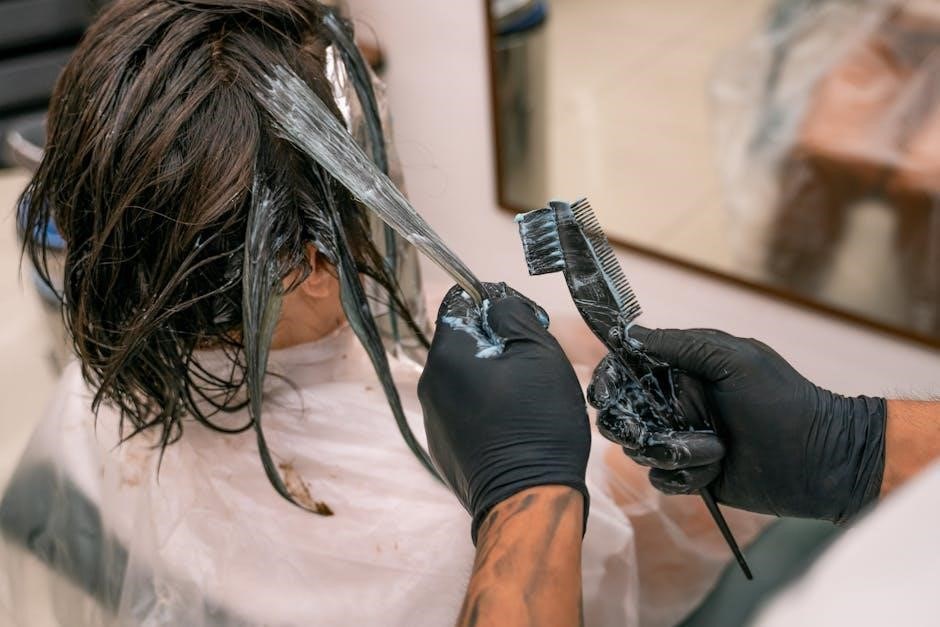
Divide the hair into four quadrants for even application. Begin applying the mixed Color Touch formula approximately ½ inch from the scalp, working quickly and efficiently. The PDF highlights the need for complete saturation, ensuring every strand is coated. Once the lengths are covered, apply the remaining formula to the roots.

Processing time, as outlined in the PDF, is crucial. Monitor the color development closely. Rinse thoroughly with lukewarm water, and the PDF suggests a final acidic rinse to enhance shine and longevity. Always refer to the PDF for detailed guidance and optimal results.
Development Time: With and Without Heat
Precise development timing is paramount when using Wella Color Touch, and the Wella Color Touch chart PDF provides clear guidelines. Generally, for a vibrant, semi-permanent result, a development time of 20 minutes is recommended without the application of heat. This timeframe allows for optimal color deposit and minimizes potential damage.
However, the PDF also details an accelerated option: utilizing heat. Applying a gentle heat source – such as a hooded dryer – can reduce the development time to 15 minutes. The PDF cautions against excessive heat, as it can compromise the hair’s integrity.

Always consult the PDF for specific shade recommendations, as certain tones may benefit from slightly adjusted processing times. Regularly checking the color development is vital, and the PDF emphasizes the importance of a strand test for predictable outcomes.
Rinsing and Aftercare for Color Touch
Proper rinsing and aftercare are crucial for locking in the vibrancy achieved with Wella Color Touch, and the Wella Color Touch chart PDF highlights these steps. Following the recommended development time, gently emulsify the color with warm water before thoroughly rinsing until the water runs clear. This ensures complete removal of the product and prevents staining.
The PDF strongly advises using the Wella Color Touch emulsion to neutralize oxidation residues and stabilize the color, enhancing longevity. Following the rinse, a color-safe shampoo and conditioner are essential. The PDF recommends Wella Professionals’ ColorMotion+ line, designed to protect and nourish color-treated hair.
Regular deep conditioning treatments, as suggested in the PDF, will help maintain hair health and prevent fading. Avoiding harsh sulfates and excessive heat styling will further preserve the color’s intensity and brilliance, ensuring lasting results;
Wella Color Touch and Hair Condition
Wella Color Touch is renowned for its gentle formula, minimizing damage and maintaining hair’s integrity. However, even semi-permanent color can impact hair condition, and the Wella Color Touch chart PDF emphasizes pre- and post-color care. Assessing the hair’s porosity and previous treatments is vital, as detailed within the PDF resources.
The PDF recommends a strand test to evaluate color uptake and potential reactions, especially on previously treated or fragile hair. Utilizing Wella’s protective treatments before coloring can fortify the hair shaft, reducing vulnerability. Following color application, the PDF stresses the importance of deep conditioning to replenish moisture and strengthen the hair.
Regular use of color-safe products, as highlighted in the PDF, prevents dryness and fading. Addressing any existing damage before coloring, and prioritizing hydration afterward, ensures healthy, vibrant results with Wella Color Touch.
Troubleshooting Common Color Touch Issues
Encountering unexpected results with Wella Color Touch? The Wella Color Touch chart PDF often includes a troubleshooting guide, addressing common concerns. Uneven color development can stem from inconsistent application or incorrect mixing ratios – refer to the PDF for precise guidelines.
If the color appears too dark, a clarifying shampoo may help lift some pigment, but caution is advised. Conversely, if the color is too light, re-application with a slightly stronger developer (within the Color Touch range) might be necessary. The PDF details appropriate adjustments.
Color fading faster than expected? Ensure clients use color-safe shampoos and limit heat styling. The PDF also suggests using Wella’s Color Touch post-color treatments to prolong vibrancy. Always consult the PDF for specific solutions related to the shade used and the hair’s condition.
Where to Find the Wella Color Touch Chart PDF
Locating the official Wella Color Touch chart in PDF format is straightforward. Wella’s professional website is a primary source, often hosting the latest versions for registered professionals. Numerous authorized Wella distributors also provide downloadable PDF charts directly on their websites, catering to salon owners and stylists.
A quick online search using keywords like “Wella Color Touch chart PDF download” yields a plethora of results. However, exercise caution when downloading from unofficial sources to avoid outdated or inaccurate charts. Always prioritize reputable websites and verify the chart’s date of publication.
Pro Tip: Bookmark the official Wella website or your preferred distributor’s page for easy access to the PDF. Regularly check for updates, as Wella frequently introduces new shades and revises its color charts.
Authenticating a Genuine Wella Color Touch Chart
Ensuring you’re using a genuine Wella Color Touch chart is crucial for accurate color results; Counterfeit or outdated charts can lead to unpredictable outcomes and dissatisfied clients. Look for the official Wella logo and branding prominently displayed on the PDF document.
Verify the date of publication. Wella regularly updates its color charts with new shades and formulations. An authentic chart will reflect the current range as of March 27, 2026. Check for a clear copyright notice and version number.
Compare the chart to samples. If possible, cross-reference the shades listed in the PDF with physical Wella Color Touch swatches. Discrepancies may indicate an inauthentic document. Finally, download directly from Wella’s official website or authorized distributors to guarantee authenticity and avoid potential issues.
Resources for Further Learning & Support
Expanding your knowledge of Wella Color Touch goes beyond the chart. Wella Professionals offers a wealth of educational resources, including online courses and webinars, designed to enhance your coloring skills. Their official website is a primary source for detailed product information and application techniques.
Numerous professional hair forums and communities provide platforms for stylists to share experiences and troubleshoot challenges related to Wella Color Touch. These forums often feature discussions about interpreting the PDF color chart and achieving specific shades.
Authorized Wella distributors frequently host workshops and training sessions. Don’t hesitate to contact them for personalized support and guidance. Remember to always refer to the official Wella documentation, including the PDF chart, for the most accurate and up-to-date information.

Latest Trends & New Shades in Wella Color Touch
Wella Color Touch consistently evolves with current hair trends. Recent innovations focus on delivering nuanced, natural-looking color and enhancing shine. Expect to see expansions within the existing color families, particularly in the realm of cool blondes and rich, dimensional brunettes.
Staying updated requires accessing the latest Wella Color Touch chart – often available as a PDF download. New shades are frequently added, and the PDF chart is the most reliable source for accurate color representation. Keep an eye out for limited-edition collections inspired by runway looks and celebrity styles.
Current trends favor soft, blended color techniques like balayage and root smudging, which Wella Color Touch facilitates beautifully. Regularly checking the updated PDF chart ensures you’re equipped to meet client demands for the most fashionable and on-trend hair colors.